
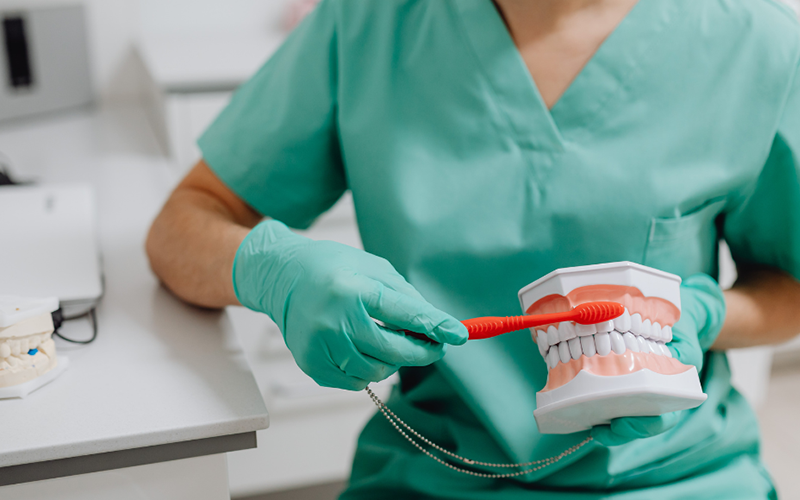
Brushing your teeth may seem like a daily routine you already know well, but many people unknowingly miss important steps. Proper brushing helps prevent cavities, gum disease, bad breath, and costly dental treatments. This easy-to-follow guide will show you the right way to brush your teeth and keep your smile healthy for life.
Why Proper Brushing Matters?
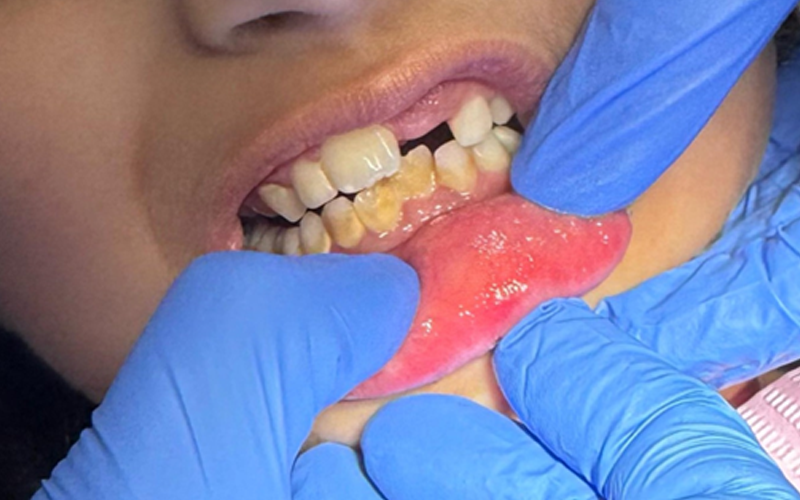
Plaque is a sticky layer of bacteria that forms on your teeth every day. If not removed properly, it can lead to tooth decay, gum inflammation, and tartar buildup. Correct brushing removes plaque effectively and protects both your teeth and gums.
What you Need Before You Start
Before brushing, make sure you have:
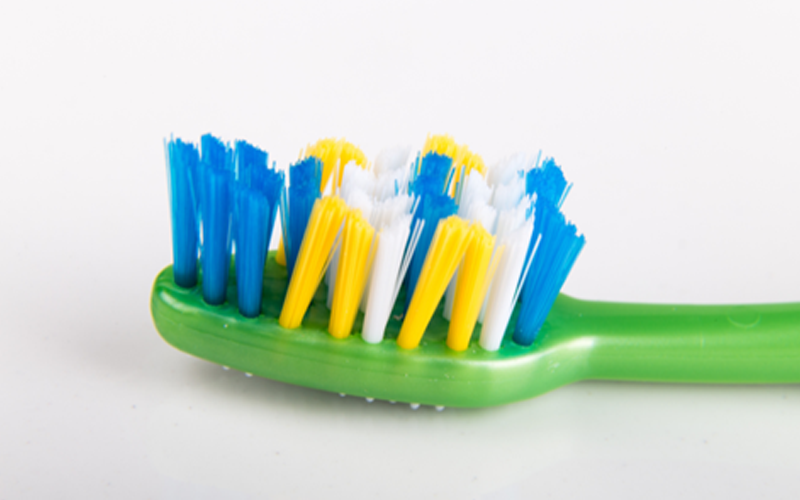
- A soft-bristled toothbrush (hard bristles can damage gums)
- Fluoride toothpaste
- Clean water
Replace your toothbrush every 3 months or sooner if the bristles look worn.
Step-By-Step Guide to Brushing Your Teeth Properly
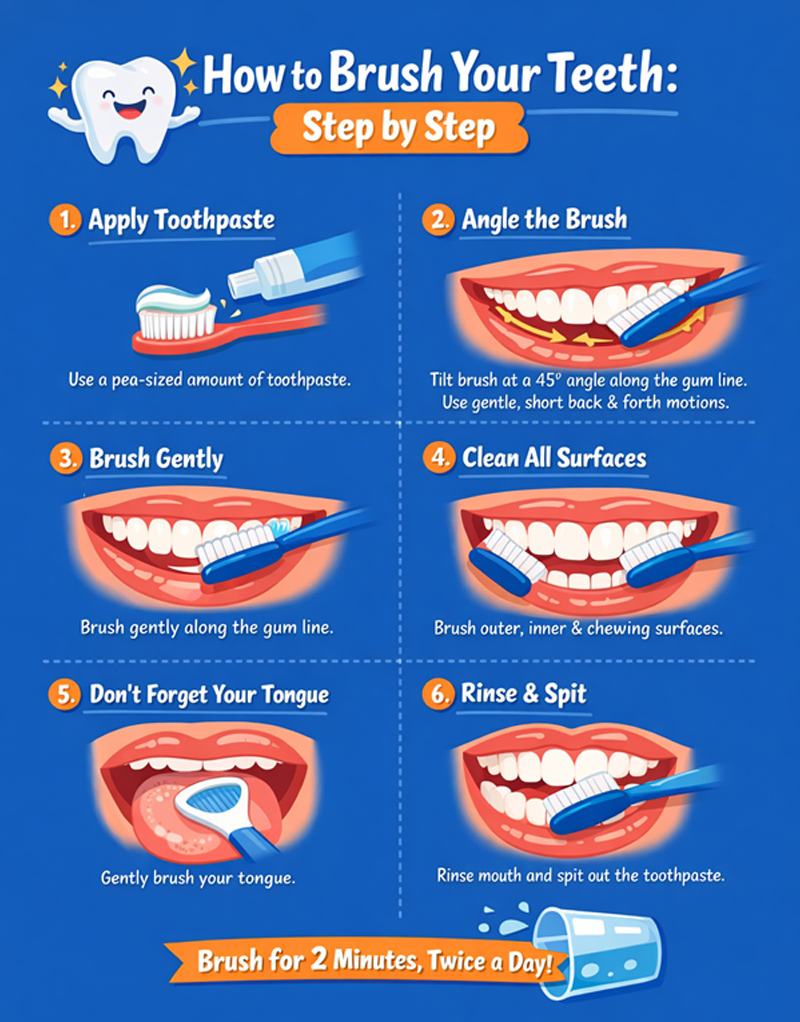
1. Use the Right Amount of toothpaste
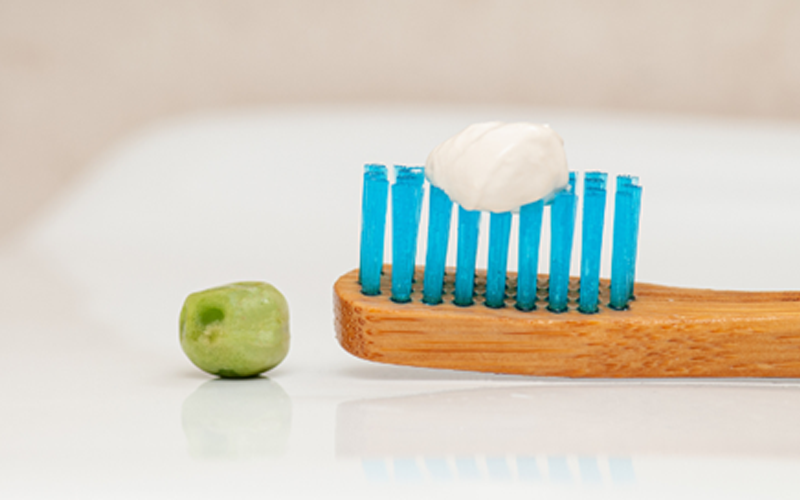
Use a pea-sized amount of fluoride toothpaste. More toothpaste doesn’t mean better cleaning.
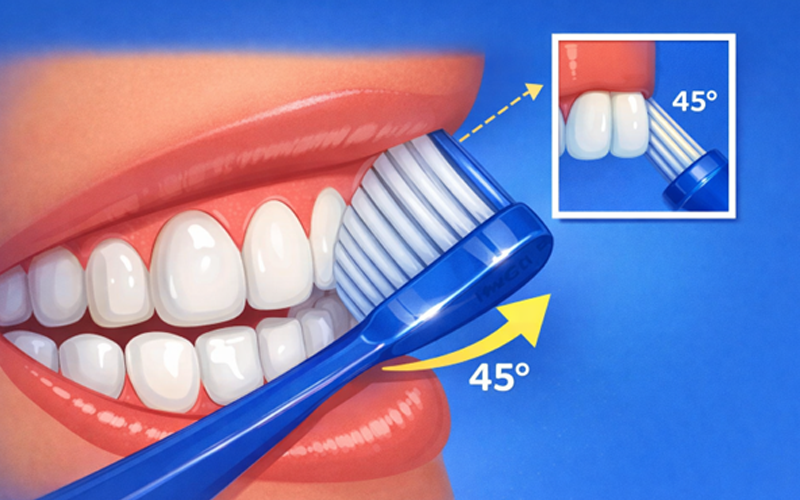
2. Hold your Toothbrush at the correct angle
Place your toothbrush at a 45-degree angle to your gums. This allows the bristles to clean both the teeth and the gumline.
3. Use gentle motions
Brush using small, gentle motions. Avoid scrubbing too hard, as this can harm your enamel and gums.
Brush:
- Outer surfaces of teeth
- Inner surfaces of teeth
- Chewing surfaces
Spend at least 2 minutes brushing your entire mouth.
4. Don’t Forget Your Tongue
Gently brush your tongue to remove bacteria that cause bad breath.
5. Do not rinse your mouth immediately
Don’t rinse your mouth immediately after brushing, as it will wash away concentrated fluoride in the toothpaste. Avoid eating or drinking for at least 30 minutes to allow fluoride to work.
Common Brushing Mistakes to Avoid
- Brushing too hard
- Using a hard-bristled toothbrush
- Brushing for less than 2 minutes
- Skipping night-time brushing
- Not replacing your toothbrush regularly
How often should you brush?
We recommend brushing twice a day—once in the morning and once before bedtime. Night-time brushing is especially important to remove food particles and bacteria accumulated throughout the day.
Extra tips for better oral health
- Floss once daily to clean between teeth
- Visit your dentist every 6 months for a check-up
- Limit sugary foods and drinks
- Drink plenty of water
Conclusion
Brushing your teeth properly takes only a few minutes but makes a big difference in your oral health. With the right technique and consistency, you can keep your teeth strong, gums healthy, and smile confident.
If you’re unsure whether you’re brushing correctly, we can guide you during your next dental visit.